Hello fellow bookworms!
Here is a ~ perhaps a little bit late ~ review of the books I read last summer. To help myself here, I mean summer in the broadest sense of the word, from June to the end of September.
It includes novels, poetry collections, and works of non-fiction. I left thoughts about the way each of these books spoke to me while I was reading them, and the lessons I needed to draw from them ~ which explains the length of this article!
It isn’t meant to be read in it’s entirety, so feel free to scroll down and have a look at the titles you feel drawn towards :)
~ Novels ~
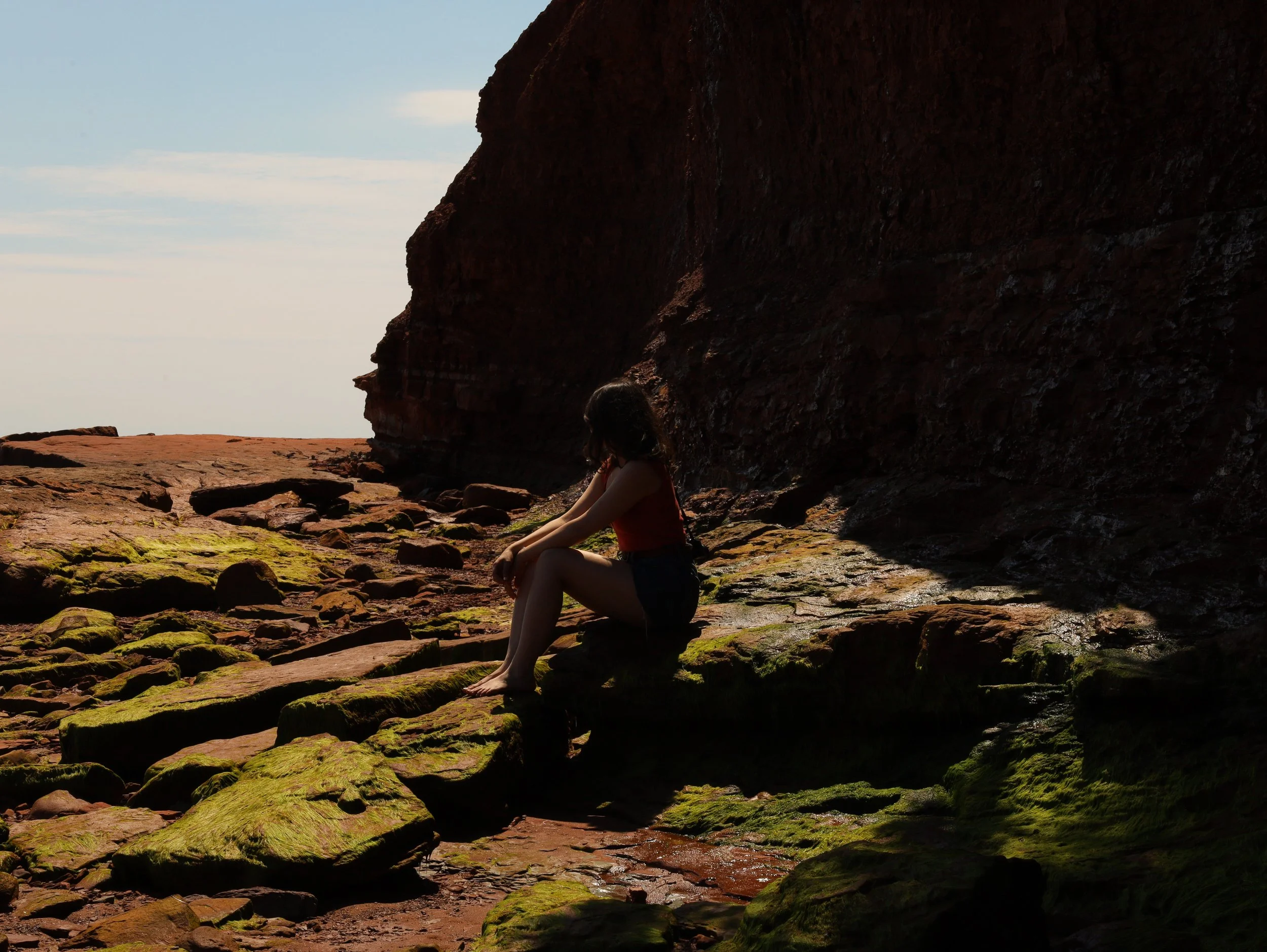
Argyle Shore, Prince Edward Island
Where the Crawdads Sing, by Delia Owens
I loved this book with all my heart <3 It’s one of those books that you want to keep reading, but you don’t want them to end. It stayed on my desk for awhile after I finished it because I didn’t want its atmosphere to leave; it felt so unique and beautiful.
In Where the Crawdads Sing, we fallow the story of Kya Clark, a young woman who grew up alone in the coastal marsh forests of North Carolina.
The first thing I loved about this book is the beauty of its descriptions. The natural landscape surrounding Kya is beautifully and vividly described ~ some of its descriptions truly feel like a written watercolor <3 Not only are the landscapes both accurately and poetically described, but Kya’s relationship with the natural world is profound and beautiful. As she grows up alone, nature becomes Kya’s mother as she draws lessons from it.
The author, Delia Owens, is an American zoologist and conservationist. Where the Crawdads Sing is her first work of fiction. Her knowledge of the natural world truly transpires throughout the book’s descriptions of life in the Marshland. I feel like the author gave us a piece of her scientific knowledge as well as a powerful story <3.
I believe that one of the reasons why this story is so powerful is that it deals with the topics of isolation and connection ~ connection with others and with nature. While reading, you do feel the effect that isolation has on Kya, as well as the importance of her connection to the natural world, as they both had a key role in her development and well-being.
The story is followed by a conversation with the author in which she tells us more about how her own experience as a wildlife researcher ~ the experience that inspired her to create the character of Kya. Delia tells us that, throughout her career, she has had to spend months, and sometimes years at a time in isolation while she was conducting research in remoted areas. This understanding of how it feels to be isolated beautifully transpires in the character of Kya.
I feel like ~ at least since the pandemic ~ we’ve all experienced how it feels to be isolated and lack connection. Kya has had to grow up with this feeling, and in reaction to it, she keeps adapting and growing. To me this is something that makes Kya so universal, relatable, and powerful.
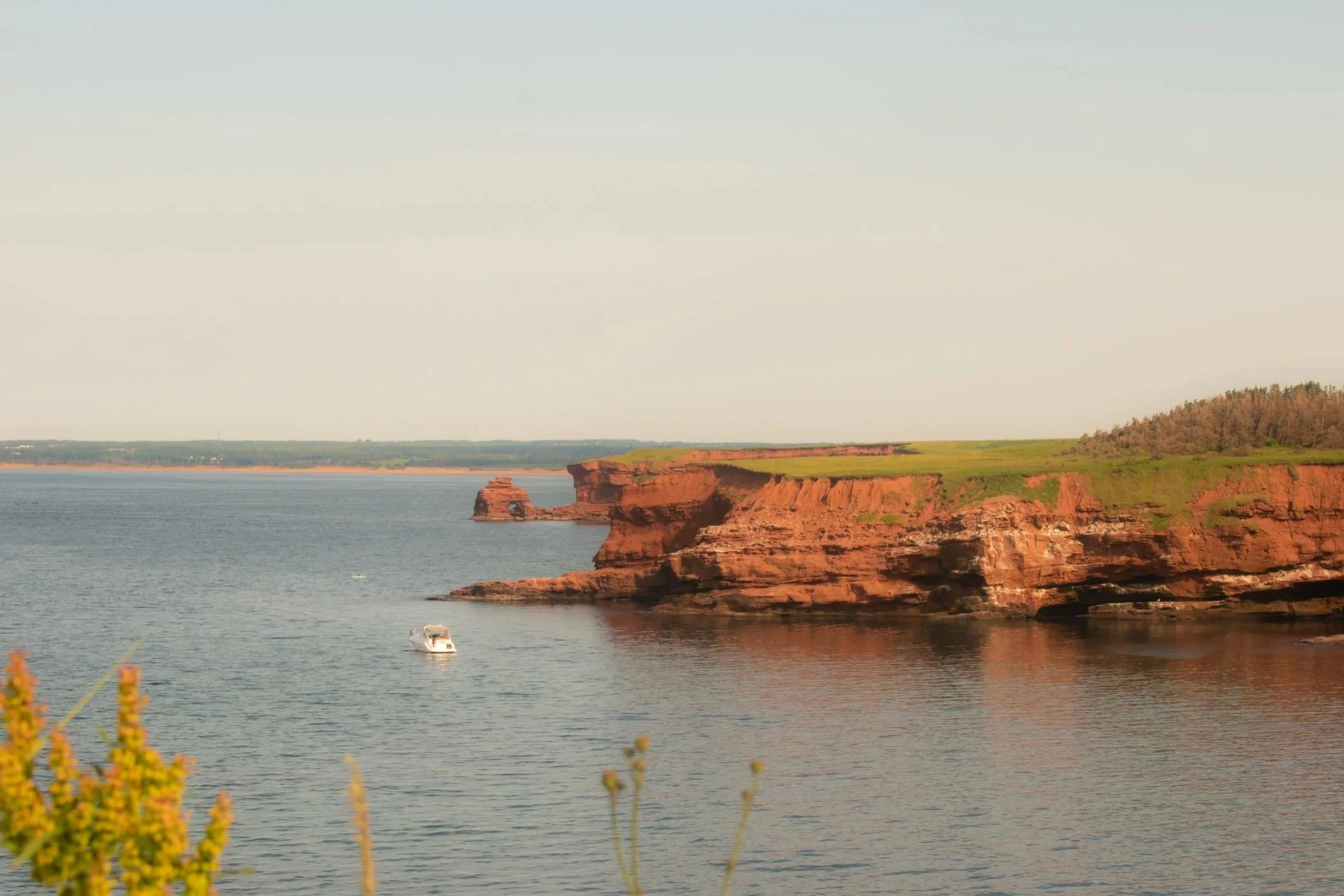
Cape Tryon, Prince Edward Island
Anne of Green Gables, by Lucy Maud Montgomery
Anne of Green Gables is the first book of the series written by L.M Montgomery, and was published in the early 20th century.
I bought a copy of this book last June while I was visiting a friend in Prince Edward Island, which is where the story takes place. I couldn’t have picked a better book for my stay there.
I truly loved L.M. Montgomery’s writing. The descriptions of the world surrounding Anne are absolutely beautiful, and the atmosphere of the book is almost enchanting.
While reading, you can see that both the writer and the character that she created share the same love for the natural world, and the same ability to witness and admire it.
As she grows up, Anne is a very emotional, creative, and sensitive. She is also very messy and outspoken, and makes so many mistakes. Anne is raised in an environment where these qualities are deemed childlike, and unfit for the responsibilities of life, especially in the opinion of her adoptive mother. But as the years pass, Marilla slowly starts to see the power in Anne’s wonder and imagination. On her side, Anne learns how to adapt her imagination to the world around her and turn it into a helpful tool.
I think that, as someone who has oftentimes been carried away by her imagination while growing up, I saw myself in Anne, and seeing the success of this story, I’m probably not the only one. Living in a society were seriousness and detachment are oftentimes praised, I beleive that this story can act as a reminder of the powers of wonder. It incites us to imagine, to not only see what is, but what could be (and hopefully make it happen) <3.
Normal People, by Sally Rooney
Yes - seven years later - I finally read Normal People.
I don’t know why I waited so long to read this novel. I realised that I generally avoid very popular books, by fear of finding them predictable, or overrated (which is probably a prejudice I should get rid of). But after my friend insisted that I must read Normal People and landed me her copy of the novel, I finally read it… and loved it! I gave her back her copy filled with annotated post its.
I truly understand why this book is so widely loved. It was the first Sally Rooney book that I read, and I can only be in awe before her incisive writing, and of course, with her ability to create characters that are so complex, truthful, and human.
I was warned about one characteristic of Rooney’s writing: she doesn’t use quotation marks while writing dialogue. Some argue that this makes the reading more confusing. I also thought so at first. But as I got used to it, I thought it made the reading more fluid and natural.
It blends the character’s inner narratives with the dialogues, which is perhaps more truthful to the way we experience interactions in our lives ~ that is, apprehending them with our expectations and our background. Perhaps it is one of the reasons why the story feels so intimate and emotional <3.
~ Poetry ~
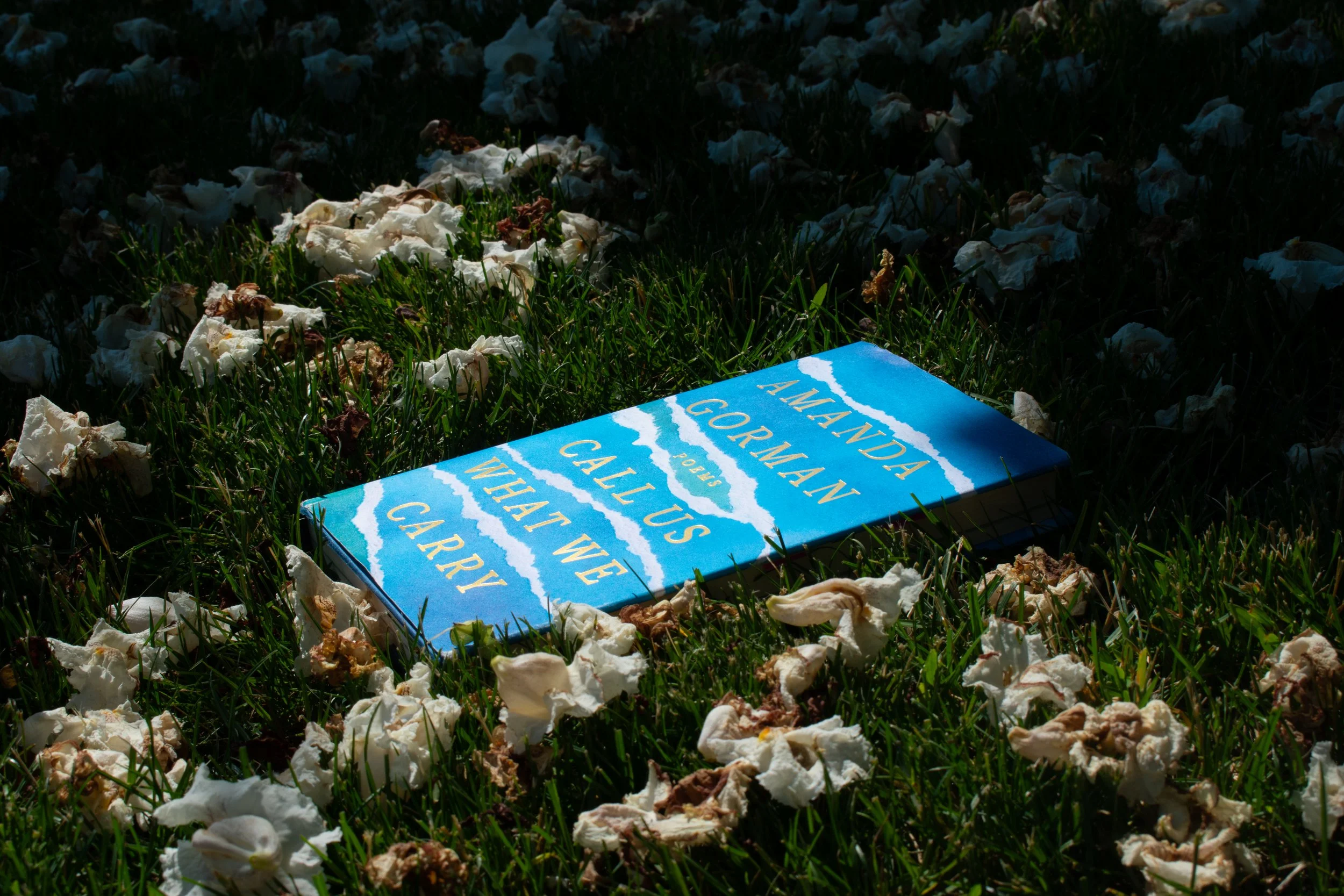
Call Us What We Carry, by Amanda Gorman
Like many others, I discovered Amanda Gorman’s poetry when she recited her beloved poem The Hill We Climb at Joe Biden and Kamala Harris’s inauguration in 2021.
I was deeply moved by Call Us What We Carry. I didn’t know what to expect when I first opened this book, which is perhaps a bit naïve, considering how skilled Amanda Gorman is and how powerful her poetry is.
Call Us What We Carry is a collection of occasional poetry, that is, poetry composed to document a moment in time. The verses of Call Us What We Carry are dedicated to the events surrounding the COVID-19 pandemic.
Reading this collection made me so emotional. This collection reminded me that I most probably still cary scars from this collective grief, and that so does our world. It’s as if, in the process of moving on from a painful and unimaginable experience, I had buried its memory.
In August 2022, I flew to Norway, where I spent six months as an exchange student. These months mark such a beautiful period of my life, and I believe that from the moment I landed in Norway, I completely buried the emotional experience of the lockdowns, and the memory of the pandemic. I almost forgot that it is probably because of this experience of isolation, sorrow, and rage, that moving abroad felt so refreshing.
Forgetting these dark days happened through healing ; they disappeared into the joy of living at last ~ faded away as I could finally fill my days with connections and new memories.
Yet, reading Call Us What We Carry revived it all: the pain, the grief, the suffocating lack of connection and the changes that this moment in time induced in our brains and in our societies. I’d forgotten that in order to truly move on from an event, we have to assess the ways it has impacted us, as individuals and as a society. The process of moving on cannot happen without feeling, growing, and changing, so that the future can be different happened, and brighter. <3
All that is to say, Amanda Gorman’s poems brightly captured these events. In this collection, the poet places herself at the crossroads between her present ~ the seemingly everlasting events of the COVID-19 pandemic ~ the heritage of a shared and unfair past, and the way towards a better future. She shares the necessity to move forward and live up to the lessons of our shared scars. <3
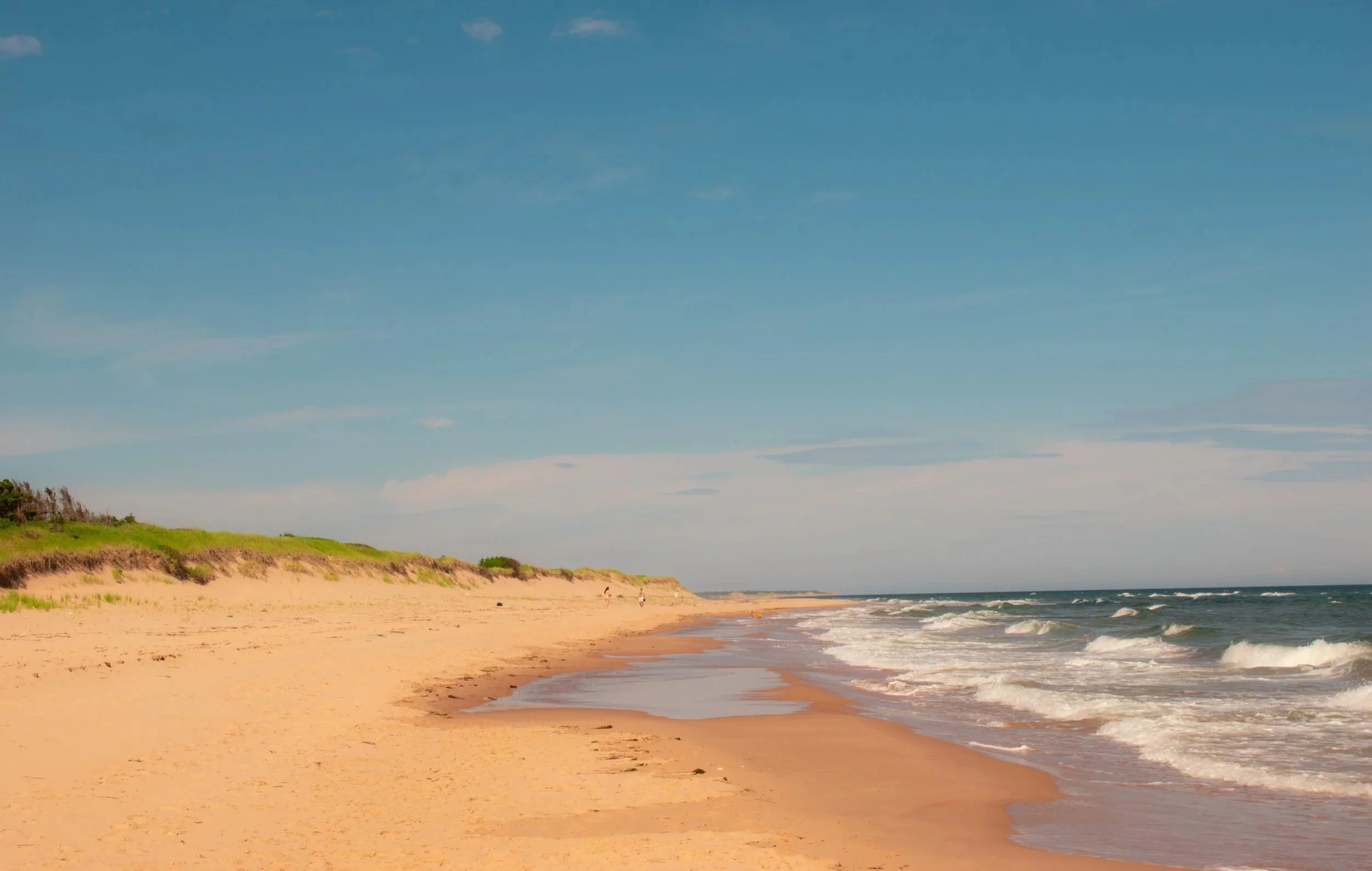
Basin Head Provincial Park, Prince Edward Island
~ Essays & Non-Fiction ~
Upstream, by Mary Oliver
I had never read Mary Oliver before I opened Upstream, and I yet need to be properly introduced to her poetry. I learned about Oliver when I came across a video of one of her public readings of her poem The Journey on Instagram.
I still remember how inspiring and comforting this poem felt ~ it conveyed the lessons I needed to hear as I was navigating unsettling feelings of uncertainty (a common symptom of being in your 20s). As you can guess, I recommend it, as much as I recommend Upstream <3.
Upstream is a compilation of essays published throughout the poet’s career. Just like The Journey, Upstream is an inspiring and grounding read. It shares the poet’s observations about her relationship with nature, creativity, and dreaming. I feel like each sentence shares a gem of wisdom, and the result feels like a call for a gentler, slower life.
There is a section of the book in which she shares thoughts about the works of other writers, including Emerson and Whitman. I was moved by her intimate understanding or their writings. It feels as if she knows them intimately, and sees the way any artist wants to be seen.
This book is a gem especially for an overthinking mind <3
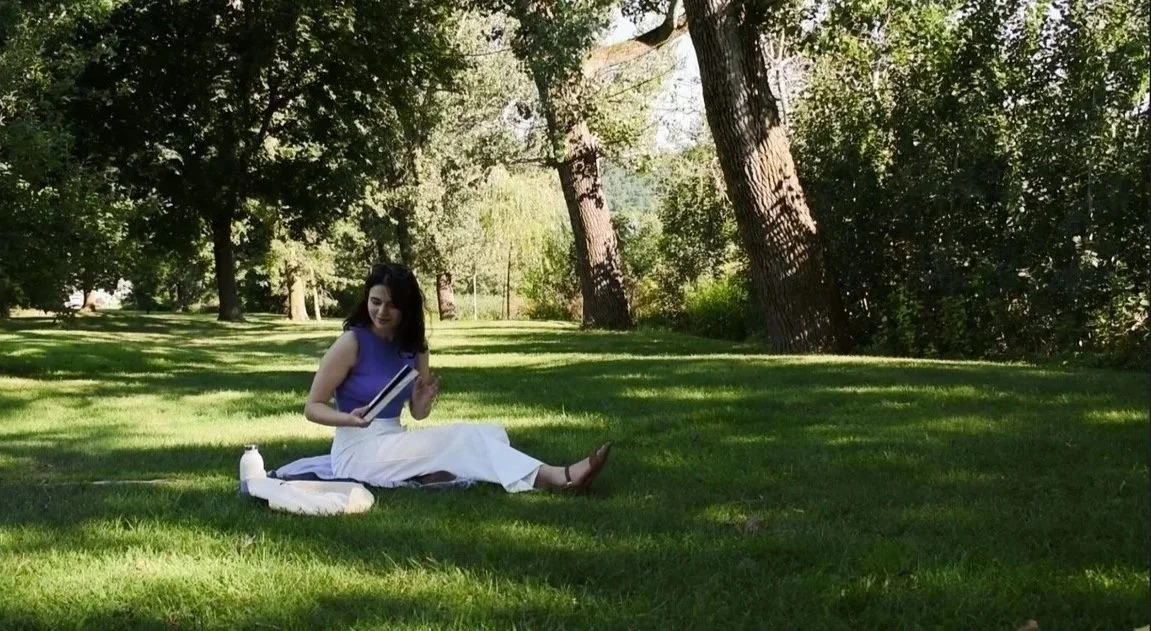
Daring Greatly, by Brené Brown
Vulnerability is the main theme of Daring Greatly.
In this book, Brown defines vulnerability as the experience of emotional exposure, uncertainty, and fear that arises when we let ourselves be seen as we are.
This feeling can arise in different contexts. It can be when we chose be authentic with someone for the first time, when we share our story publicly, or simply when we let ourselves feel our fears and the myriad of emotions that live within us.
She argues that these feelings are not optional. We can’t avoid them in a healthy manner, even if it is through perfectionnism. Brown argues that, if we wait to “be perfect” before we engage in the world, we sacrifice opportunities, relationships, and precious connections.
If we avoid vulnerability, we also risk losing access to compassion and other emotions that give meaning to life. Instead, we must dare to show up and let ourselves be seen as we truly are. The only way to do so is by leaning into our vulnerability and feel what comes with it. We all know this to feel messy, uncomfortable, and scary. In a context where being vulnerable is scary, to do it is to dare greatly, and that is true courage.
In this book, Brown also detangles some of the myths surrounding vulnerability. We live in cultures where vulnerability is often seen as a weakness, or as a sign that we are fragile. But in fact, it is the opposite, daring greatly requires strength and courage.
The author also explores what she calls Wholeheartedness. That is, our ability to go through life embracing our vulnerability, believing in our worthiness and being resilient to shame.
Once again, I highly recommend this book to anyone <3. I am honestly grateful to have access to such insightful advice at a time when I find myself stepping out of my comfort zone. But you do not need to go through life changes to benefit from this knowledge. Vulnerability is at our core and is essential for a meaningful, connected life. <3.
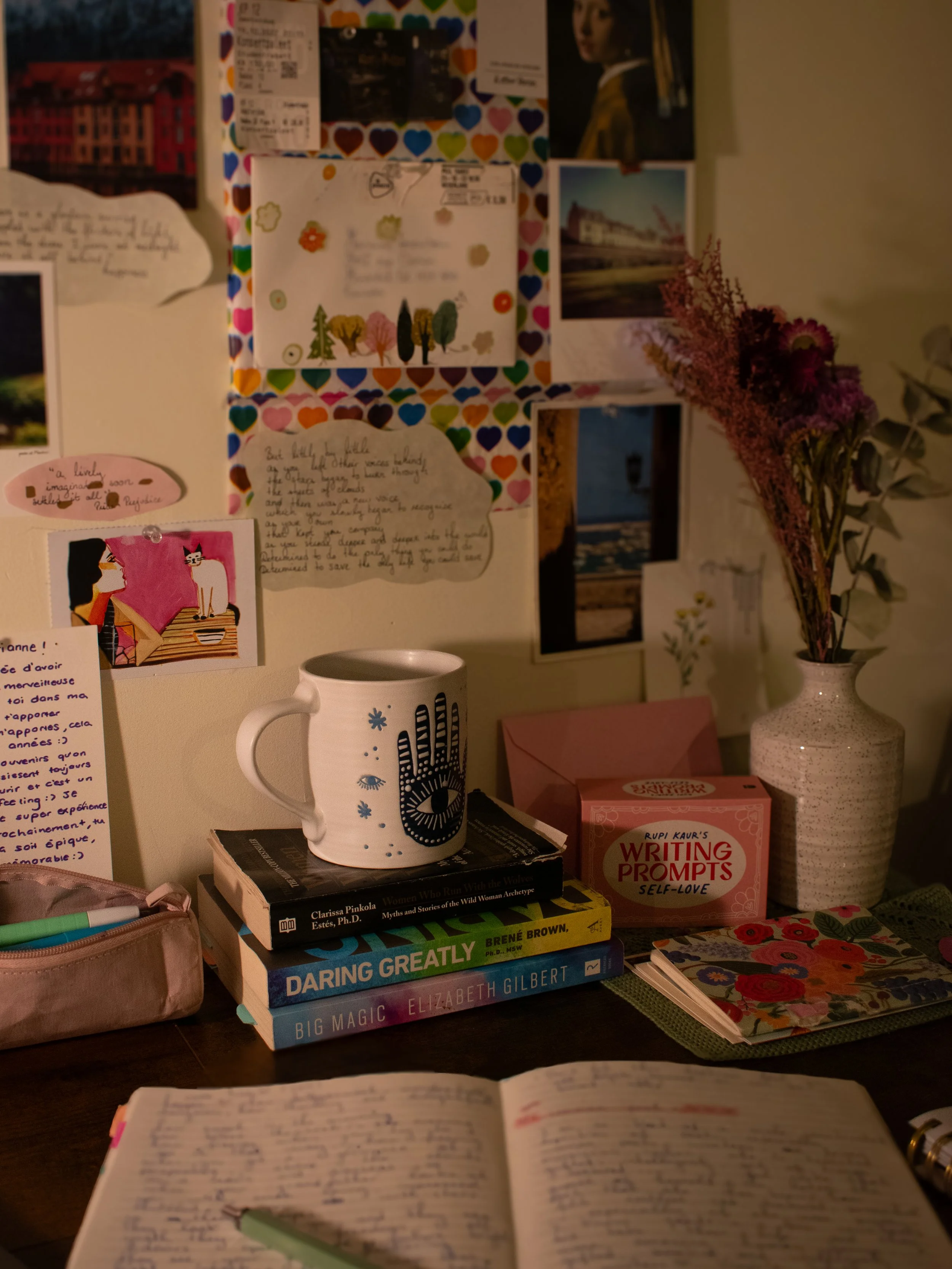
Big Magic: creative Living Beyond Fear, by Liz Gilbert
I really enjoyed reading this book. In Big Magic, Liz Gilbert shares glimpses into her creative process with humility, humor, and optimism.
I have to admit that, as an academic-minded gal, I was at first a bit reluctant to dive into this book since it isn’t a psychological nor scientific approach to creativity.
Instead, the author shares her own experience with creativity and how she engages with it. Writing can be a solitary activity. I also feel like, as artists, we don’t always understand the creative process and the rollercoaster of emotions that come with it. Reading about another writer’s experience can be encouraging and soothing ~ especially when it’s through Liz Gilbert’s luminous prose.
In this essay, the author detangles some of the challenges that come with writing, such as facing imposter syndrome, losing inspiration, or struggling to give ourselves the permission to create. With valuable hindsight, she shares the way she has learnt to face these challenges and normalizes the feelings of fear that come with sharing our work with the world.
I think that what I liked most about this book is that the author values creativity for what it is. That is, for what it brings to our lives and to our communities, rather than for the success that could come with it. She also has a broad vision of what creative living is so that anyone can engage with it <3.